What does the viewer need to know?
Before you choose a format, write down who will look at it and what they need to decide. A councillor needs to know how the building meets the street. A buyer scrolling on a phone needs a reason to stop. A buyer in the sales centre needs to know whether the kitchen works and which homes are left. A broker needs something to send a client tonight.
Those are four different jobs. A still does the first one best. A short film does the second. A 360 view helps with the third, and an interactive tour with live availability does the third and fourth together. Most projects end up using several, and the cost of doing so depends almost entirely on whether they share one scene.
Budget follows the same logic. The effort is in the scene, the detail and the number of things the viewer can see. A still hides what is outside the frame; a 360 view and a tour hide nothing, so more of the scene must be finished. Here is how each format works, what it is good at and what it needs from you.
The four formats compared
Swipe to see more →
| Stills | Film | 360 views | Interactive tour | |
|---|---|---|---|---|
| Best for | Council, the website hero, print, the broker kit | Launch campaigns, social, the sales-centre loop | Showing a room or a view from a balcony | Letting buyers explore homes, plans and availability |
| Who controls it | The studio frames every view | The studio controls the story and pace | The viewer looks around from a fixed point | The viewer moves, chooses and compares |
| Where it lives | Everywhere: print, web, email, boards | Web, social, screens, events | Web, tours, sales-centre screens | Web, touchscreens, kiosks, presenters |
| What it needs | A settled design and a clear shot list | An approved scene, a storyboard, music and titles | A finished scene in every direction from each point | Plans, unit data, availability and the approved media |
| Effort | Lowest per piece; each extra view adds work | Highest per minute; every frame must be finished | Moderate; the whole room has to be finished | Highest to set up; then content updates are quick |
| Changes later | Re-render the affected views | Re-render affected shots and re-edit | Re-render affected points | Update data in one place; media updates from the scene |
| Weak spot | Shows only what you chose to show | Hard to update once cut | Can feel static; no sense of moving through | Needs an owner to keep availability current |
Stills: the workhorse
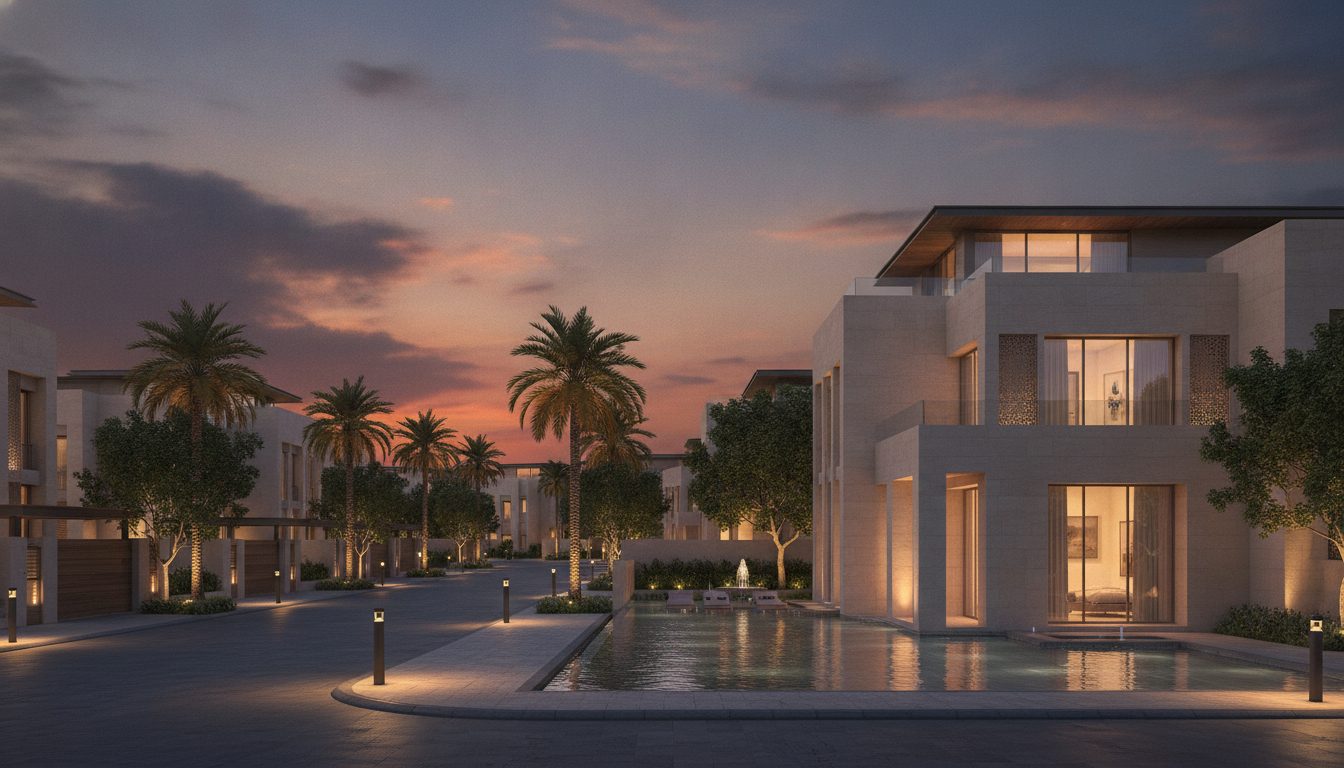
Stills are the most flexible format and the one every project needs. A good still is composed like a photograph: one idea, a clear subject, and light that tells you the time of day and the mood. They go on the website, the hoarding, the brochure, the council report and the broker email.
Stills are also the most controlled format. You decide exactly what the viewer sees, which is a strength for marketing and a responsibility for council work. For approvals, the camera should stand where people stand and use a lens close to normal vision. Our guide to rezoning visuals in BC covers that in detail.
Stills are where AI variation pays off most. Once a view is approved, the same scene can produce dusk, winter, a summer weekend and a quiet morning, without touching the building. See AI visualization.
Film: the feeling
Film does what stills cannot: it moves the viewer through space and time. A flythrough shows how the building sits on the site and how you arrive. A lifestyle film shows what a Saturday feels like there. Short cuts for social catch people who would never open a brochure.
Film is the most demanding format per second. Every frame has to be finished, the camera sees more of the site than any still, and pacing, music and editing are their own craft. It is also the hardest to change once it is cut, so it should be built from an approved scene, after the stills have settled the design.
Plan the cut-downs from the start. A wide film cropped to vertical afterwards loses the building. Storyboard the vertical, square and wide versions together. Our film and animation page covers the deliverables.
360 views: standing in the room
A 360 view puts the viewer at one point and lets them look in every direction. It answers the questions a still cannot: what is behind me, what does the kitchen look like from the living room, what do I see from the balcony. It is especially good for views from particular floors, amenity spaces and show homes that do not exist yet.
Because the viewer can look anywhere, the whole room has to be finished, ceiling and floor included. 360 views work best as part of something larger: embedded in a tour, linked from a floor plan, or shown on a sales-centre screen. On their own they can feel like a place you cannot move through. Royal Bay in Colwood is one of our projects with a 360° tour alongside master plan visuals.
Interactive tours: exploring and choosing
An interactive tour lets the buyer drive. They pick a building, a floor and a home, see the plan, check what is available, look around in 360 and register their interest. It works on a phone at night and on a large touchscreen in the sales centre with an agent beside them.
Interactive is less about pictures and more about data. The tour is only as useful as the availability and plans behind it, so someone has to own those. When it is connected to one source of availability, the website, the sales-centre screens and the price sheet agree. When it is not, it becomes the place buyers find out a home already sold.
Real-time engines take this further, letting the buyer move freely rather than jump between fixed points. Vista Point on Vancouver Island is one of ours, an Unreal Engine real-time tour with stills from the same project. Our web tours and sales galleries are live today.
What most projects need, and when
- 01
Design and rezoning
Stills, mostly eye-height street views, plus shadow studies. Massing models while the design is moving. Film and interactive are rarely worth it yet.
- 02
Registration and pre-launch
A hero still, a few supporting stills and a short film or teaser. The website and registration page carry them.
- 03
Launch and sales centre
The full still set, the hero film and its social cuts, 360 views of key rooms, and an interactive tour on the web and the sales-centre screens with availability.
- 04
During sales
Seasonal and time-of-day variations from the approved scene keep the campaign fresh. The tour carries availability as homes sell.
- 05
Construction and handover
Progress updates and drone capture show the real building rising. The approved scene still serves later phases.
Who uses which format
Architect
Stills and 360 views that show the design accurately, especially the details they fought for.
Accuracy checks on every format before it goes public, not just the stills.
Film frames, 360 points and tour media are reviewed on the same record as the stills, so the architect checks them once in one place.
Marketing agency
Stills in every crop, the hero film and social cuts in every aspect, on the campaign calendar.
The calendar early, so variations and cut-downs are planned from the first scene.
The agency pulls approved media from one library instead of a folder of downloads.
Sales team
A tour and sales-centre screens they can present from, with availability they trust.
Availability kept current, and feedback on which homes buyers are asking about.
The tour, the screens and the price sheet read the same availability, so the agent never contradicts the website.
Brokers
Something to send a client tonight: a still, a film link or a link to a specific home.
Their clients' interest, registered with the home they viewed.
Share links point to the approved set or a specific home, and registrations land in your list.
Questions to answer first
- ✓Who is the viewer, and where will they see it: a council chamber, a phone, a sales centre, a billboard?
- ✓Is the design settled enough for film and 360, or only for massing stills?
- ✓How many plan types and floors are there, and do the views differ by floor?
- ✓Who will own availability, and in which system?
- ✓Which formats will you need for later phases, and can they come from the same scene?
One scene underneath all four
The formats differ on the surface, but they all start with the same thing: an accurate 3D model of the building in its context, lit and dressed. If each format is ordered from a different supplier, that model gets built three or four times, and each version drifts from the drawings in its own way.
Built once, the same scene feeds the stills, the film, the 360 points and the tour. When the architect changes a balcony, it changes once and every format picks it up. At BDM3d the building always comes from that true model; AI changes only light, season, landscaping, styling, people and motion, and every AI frame is checked against the approved drawings before release.
Questions
What is the difference between a 360 view and a virtual tour?+
A 360 view lets you look around from one fixed point. A virtual tour links several points, plans and often availability, so you can move between rooms and homes. Most tours include 360 views.
Do I need an animation for a presale?+
Not always, but most launches benefit from a short film for social and the sales centre. If the budget is tight, start with strong stills and plan the film from the same scene later.
Is an interactive tour worth it for a small project?+
It depends on how buyers choose. If there are several plan types and views that differ by floor, a tour answers questions that stills cannot. For a handful of similar homes, stills and a floor plan page may be enough.
Which is best for council, stills or film?+
Stills, from real eye-height vantage points, with shadow studies. A short film can help show approach and context, but council decisions rest on views they can check.
Can renderings and the tour come from the same model?+
Yes, and they should. One scene keeps every format consistent with the drawings and makes changes cheaper.
Does an interactive tour need an app?+
Not ours. Our web tours run in the browser on phones, tablets and computers, and the same content runs on sales-centre touchscreens.
Which format should I order first?+
Stills, almost always. They settle the design and the look, and the approved scene then feeds the film, the 360 views and the tour. Ordering film first means changing it later, which is the most expensive place to make changes.
How do I keep availability in the tour up to date?+
Connect it to one source of availability that the sales team updates. SalesLink, our inventory, pricing and leads module, is coming; until then we connect to the system you use.